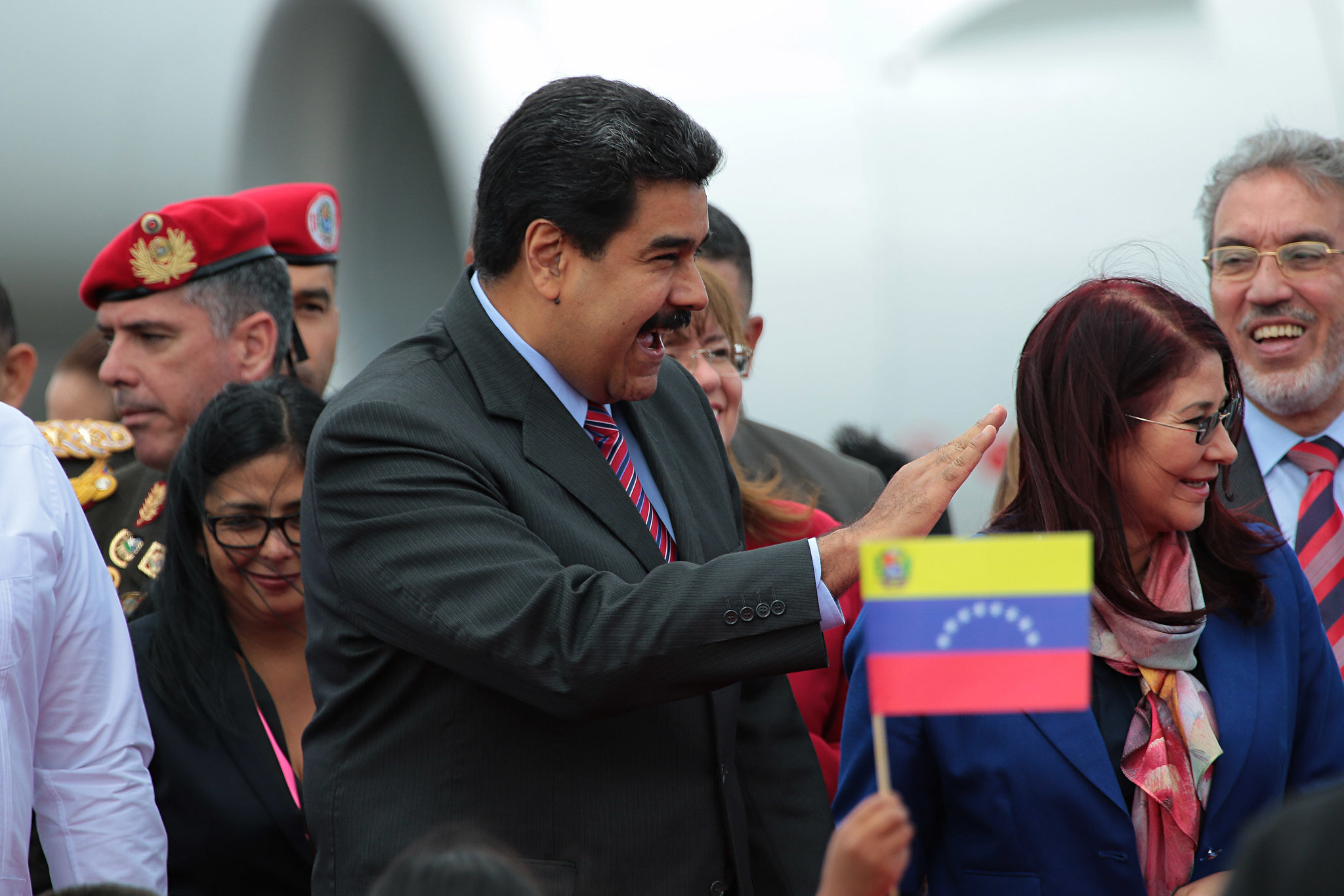
In early 2019, the rainy season in Venezuela was over, but a political storm was brewing. Having clung to power in a largely boycotted ‘election’, Nicolás Maduro took the stand at the Supreme Court for his inaugural speech. It was a tirade in which he threatened Europe, America and Columbia with paying a “historical price” if they do not respect Venezuela. Venezuela is a catholic socialist country in Latin America with the largest oil reserves known in the world, and close ties to Russia, Iran, and China. Needless to say, it does not enjoy good relations with the US. Only the year before Maduro had claimed that the United States was trying to kill him.
Maduro seemed ripe for removal, and within a month of his reelection, a young fresh-faced leader of the opposition by the name of Juan Guaidó declared himself president amid a clamouring of popular support and international backing.
Slim tailored suit, top button undone, and boyish features, Guaidó wore the look of neoliberalism well. His struggle to take power from the incumbent drew the eyes of the world – much of the west fell in behind his claim to the presidency. The Trump Regime gave Guaidó their full support, and he was soon recognised as president by Brazil, Canada, Argentina and the entirety of the European Union.
Maduro, however, did not step aside, instead, tensions heightened as the two claimants to the presidency wrestled for power. Over the course of 2019, the political conflict threatened to spill over into military engagement between Caracas and Washington DC. In February that year, the American army amassed on the Venezuelan border in Columbia, suggesting a prior agreement between the Whitehouse and the Venezuelan opposition.
In short order, Elliot Abrams was appointed the American special representative to Venezuela, effectively putting him in charge of forcing Maduro from power. This was not Abram’s first Venezuelan coup, he had previously orchestrated the failed removal of Hugo Chavez in 2002.* Abram’s opening gambit of piling aid on the border and daring Maduro to take it was a stroke of genius. The humanitarian crisis in Venezuela (caused largely by American sanctions) meant if Maduro refused the aid he was a cruel leader who deserved to be removed, but if he accepted it then he was accepting he was not fit to rule without American support, and therefore should be removed and replaced with American aligned Guaidó.
It might have worked but the history of US intervention in South America is too full of well-known secrets and subterfuge for anyone serious to take the US at face value. International organisations from the UN to the Red Cross publicly refused to collaborate with the US aid program, echoing the criticism of many scholars that America was trying to use the suffering of Venezuelans as a pawn to push its agenda of regime change.
International attention was at its highest during this drama but has since disappeared, the tensions in Venezuela have not.
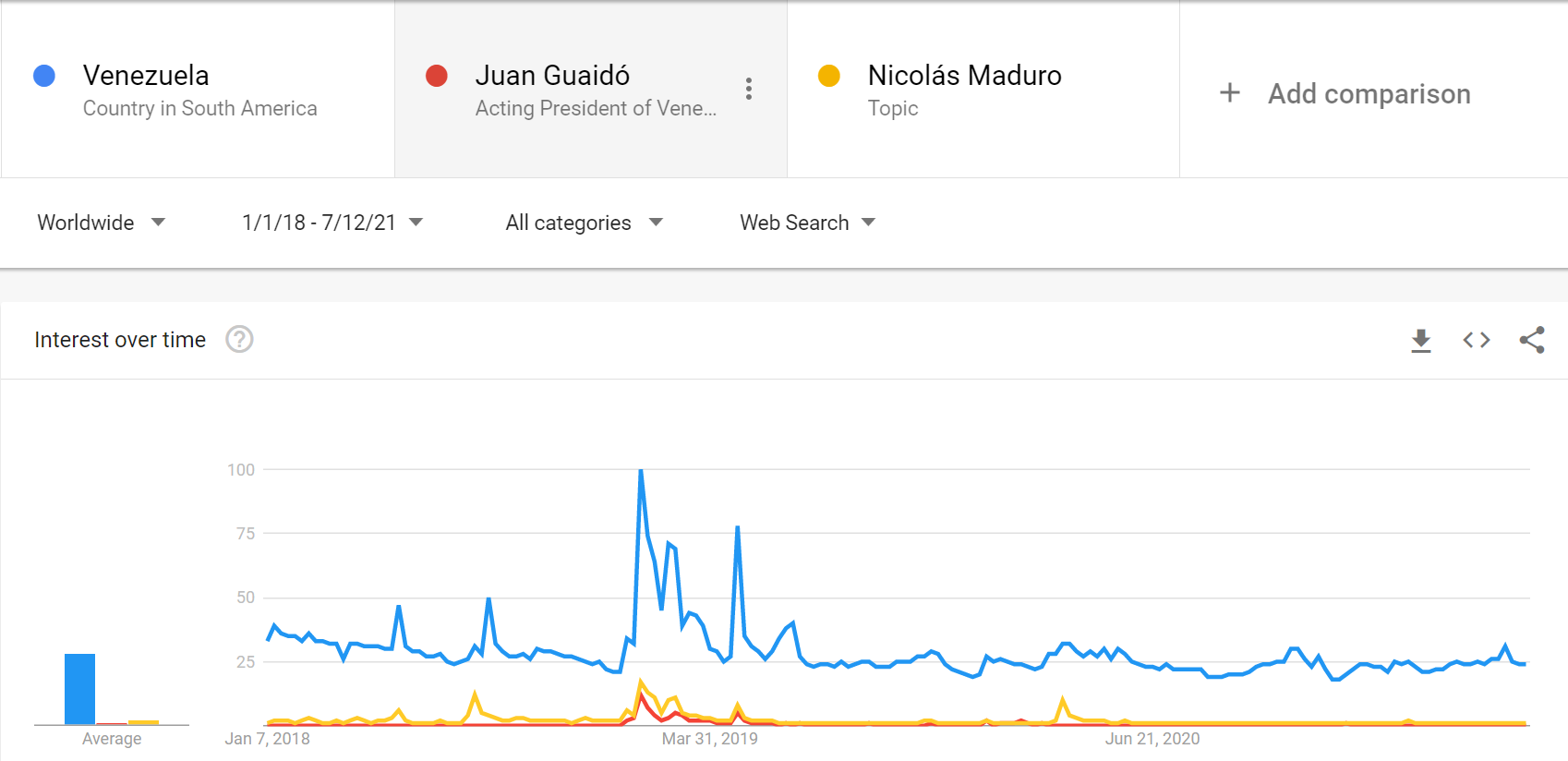
As time has gone on, the specific threat to Maduro posed by Guaidó has faded away, by April this year the EU reverted its stance, accepting that the president of Venezuela was there to stay. With regime change no longer on the cards, Maduro’s attention in the last two years has been on freeing the country from the crippling sanctions imposed under Trump and maintained by the Biden administration. To this end Maduro has until recently played the appeasement game, making gestures toward democratic reform – the electoral council is now two-fifths controlled by the opposition. He has pushed for free-market fiscal policy, with the state allowing companies such as rum distiller Santa Teresa to issue fixed-rate bonds on the local market.
This alone did not bring an end to the sanctions and embargoes which have impoverished the South American nation and caused a mass exodus of Venezuelan refugees.
It appears Maduro is now trying to add a second strategy. Two Iranian vessels, a destroyer and a cargo ship have been tracked crossing the Atlantic over the last two weeks. As they approach the American continent they seem to be headed for Venezuela. The Iranian ships are feared to be carrying weapons to Venezuela, potentially long-range missiles capable of targeting the United States. Whatever the ships are carrying, the advancement of a Persian-Venezuelan military alliance is cause for concern among American officials.
Maduro’s two-pronged strategy, of threats and appeasement, shows early signs of working. The US Treasury has issued a license for the export of liquid petroleum to Venezuela, this is a small step, real economic improvement will happen when Venezuela is the exporter, not the importer of petrol. But it is a move in the right direction and a signal that Maduro is still in the game. It may not help, however, that Guaidó has claimed he is facing renewed prosecution by Maduro’s security forces.
The situation continues to evolve in Venezuela, Maduro’s strategy requires a delicate balance, threatening America may have worked this time around, but taken too far and it could become untenable for the US to continue lifting sanctions. Further threats and armed conflict may become a possibility once more.
Like so much else for Venezuelans, hope is in short supply. The humanitarian crisis continues, and with the economy in free-fall, organised crime increasingly plays the role of the state. Venezuela is already a contender for the highest homicide rate of any country in the world, open gunfights between gangs and police on the streets of Caracas signal an ever-worsening internal situation. If Maduro can continue to negotiate productively with America, it may just be possible for Venezuela to turn its fortunes around.
*Abram’s shadowy career in American politics is stained with Latin American blood. I highly recommend reading The Intercept’s report on his legacy. https://theintercept.com/2019/01/30/elliott-abrams-venezuela-coup/
E. Martin
 Aftermath